domingo, 22 de noviembre de 2009


PHRASAL VERBS AND PREPOSITIONAL PHRASES
http://www.slideshare.net/130303/phrasal-verbs-and-prepositional-phrases
sábado, 21 de noviembre de 2009
A NICE EXPERIENCE
THIS IS ONE OF THE INTERVIEWS MY STUDENTS HAD TO DO, THEY ENJOYED IT TOO MUCH, I AM ADDING IT TO THIS BLOG BECAUSE I WANT YOU TO REALIZE DIFFERENT ACIVITIES YOU CAN ASK YOUR STUDENTS TO DO IN ORDER TO HAVE DIFFERENT CLASSES WITH REAL SITUATIONS
http://www.youtube.com/watch?v=6m_1WQUsatU
http://www.youtube.com/watch?v=6m_1WQUsatU
A TOAST TO PROFESSIONALISM 1ST PART
I have often wondered why the teaching profession is so unpopular these days. Facts show that if you just visit some of the Teacher Training Colleges, you will see that the number of students who are interested in devoting their lives to teaching has decrease considerably ans so has the graduate rate a t the end of every academic year. At this pace, in fifty years from now, teachers will either become extinct or be in danger of estinction.
The answers, I believe, lies in society as a whole. Why is it that some time ago our grandparents highly respected teachers because they believed they were the ones who would help their children develop the personal, social and academic skills they needed to succeed in life? What has happened to our society since then that we have become no more than nannies who look after children, entertain them, keep them busy and teach them a couple of things here and there among all the trivial things we are now asked to do? Schools have become warehouses where children are dumped early in the morning and withdrawn in the afternoon. Most parents no longer educate their children, they expect others to do the job for them and if the product of that process is not good enough, it is always easier to see, analyse and judge others than to actually go over one's own decisions, revise them and spot where they went wrong...
The answers, I believe, lies in society as a whole. Why is it that some time ago our grandparents highly respected teachers because they believed they were the ones who would help their children develop the personal, social and academic skills they needed to succeed in life? What has happened to our society since then that we have become no more than nannies who look after children, entertain them, keep them busy and teach them a couple of things here and there among all the trivial things we are now asked to do? Schools have become warehouses where children are dumped early in the morning and withdrawn in the afternoon. Most parents no longer educate their children, they expect others to do the job for them and if the product of that process is not good enough, it is always easier to see, analyse and judge others than to actually go over one's own decisions, revise them and spot where they went wrong...
TKT COURSE
Es un curso inducción a la enseñanza del idioma inglés que está encaminado a aquellas personas que estén interesadas en iniciar una carrera como maestros de inglés.
Consta de 120 horas que incluyen:
· Teorías del aprendizaje· Diferentes metodologías para la enseñanza del idioma inglés · Diferentes técnicas de enseñanza· Planeación de clase · Desarrollo y utilización de material didáctico· Manejo de clase
El TKT Course ofrece un balance teórico práctico, ya que no solamente se analizan las diferentes metodologías y técnicas de aprendizaje, sino que se aplican dichos conocimientos al permitirse a los candidatos que impartan clases recibiendo retroalimentación al término de las mismas. Al término del curso el nuevo maestro recibe un diploma de Intenational House que lo acredita como maestro de inglés, y si él lo cree conveniente puede recibir el diploma TKT una vez que haya presentado el examen correspondiente.
http://www.cambridgeesol.org/TKT/index.htm
If you want to know more about it, write down a comment and I will send the information to you by e-mail
Consta de 120 horas que incluyen:
· Teorías del aprendizaje· Diferentes metodologías para la enseñanza del idioma inglés · Diferentes técnicas de enseñanza· Planeación de clase · Desarrollo y utilización de material didáctico· Manejo de clase
El TKT Course ofrece un balance teórico práctico, ya que no solamente se analizan las diferentes metodologías y técnicas de aprendizaje, sino que se aplican dichos conocimientos al permitirse a los candidatos que impartan clases recibiendo retroalimentación al término de las mismas. Al término del curso el nuevo maestro recibe un diploma de Intenational House que lo acredita como maestro de inglés, y si él lo cree conveniente puede recibir el diploma TKT una vez que haya presentado el examen correspondiente.
http://www.cambridgeesol.org/TKT/index.htm
If you want to know more about it, write down a comment and I will send the information to you by e-mail
THANKSGIVING DAY

Thanksgiving Day is a joyous family festival celebrated with lot of enthusiasm in US, Canada and several other countries. Thanksgiving Day Festival commemorates the feast held by the Pilgrim colonists and members of the Wampanoag people at Plymouth in 1621. On this day people express gratitude to God for his blessings and give thanks to dear ones for their love & support. Feasting with family is an integral & most delightful part of Thanksgiving Day celebrations.
Thanksgiving is a time for togetherness... it's an occasion to be spent in the warm and loving company of family, loved ones and friends enjoying turkey roast and pumpkin pies with them. Thanksgiving is also an opportunity to renew the ties that bind us with the ones we love... it is a time for remembering, cherishing and being thankful for all the good things you have been blessed with. So it's time to say 'Happy Thanksgiving'
BENJAMIN FRANKLIN
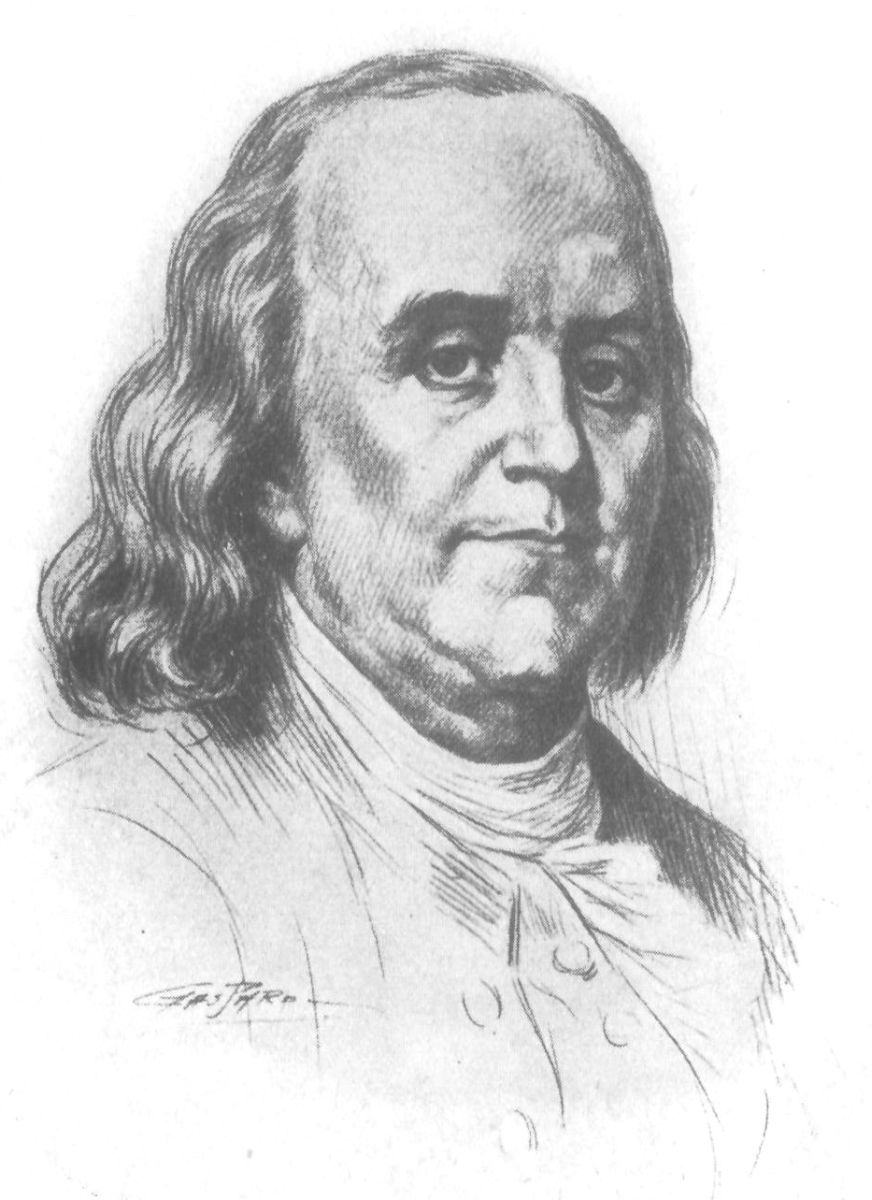
I was not only one of the Founding Fathers of the United States. I was a leading writer, publisher, inventor, diplomat, scientist, and philosopher. I am well-known for my experiments with electricity and lightning, and for publishing "Poor Richard's Almanac" and the Pennsylvania Gazette. I served as Postmaster General under the Continental Congress, and later became a prominent abolitionist. I am credited with inventing the lightning rod, the Franklin Stove, and bifocals.
A year after my death, my autobiography, entitled "Memoires De La Vie Privee," was published in Paris in March of 1791. The first English translation, "The Private Life of the Late Benjamin Franklin, LL.D. Originally Written By Himself, And Now Translated From The French," was published in London in 1793.
A year after my death, my autobiography, entitled "Memoires De La Vie Privee," was published in Paris in March of 1791. The first English translation, "The Private Life of the Late Benjamin Franklin, LL.D. Originally Written By Himself, And Now Translated From The French," was published in London in 1793.
Known today as "The Autobiography of Benjamin Franklin," this classic piece of Americana was originally written for my son William, then the Governor of New Jersey.
The work portrays a fascinating picture of life in Philadelphia, as well as my shrewd observations on the literature, philosophy and religion of America's Colonial and Revolutionary periods. I wrote the first five chapters of my autobiography in England in 1771, resumed again thirteen years later (1784-85) in Paris and later in 1788 when I returned to the United States. I ends the account of my life in 1757 when I was 51 years old.
Considered to be the greatest autobiography produced in Colonial America, Franklin's Autobiography is published here in 14 chapters.
The work portrays a fascinating picture of life in Philadelphia, as well as my shrewd observations on the literature, philosophy and religion of America's Colonial and Revolutionary periods. I wrote the first five chapters of my autobiography in England in 1771, resumed again thirteen years later (1784-85) in Paris and later in 1788 when I returned to the United States. I ends the account of my life in 1757 when I was 51 years old.
Considered to be the greatest autobiography produced in Colonial America, Franklin's Autobiography is published here in 14 chapters.
viernes, 20 de noviembre de 2009
PRESENT SIMPLE NEGATIVE
Here you have a video which talks about present simple in negative but remember new teachers need to be dynamic and look for different strategies in order to keep our students attention
http://www.youtube.com/watch?v=PqrRtVp8BOM
http://www.youtube.com/watch?v=PqrRtVp8BOM
TEAM TEACHING

Also known as co-teaching or collaborative teaching, team teaching is an instructional strategy used across subject areas primarily in middle grades in a variety of methods. Teams are typically composed of between two and four teachers working collaboratively to plan thematic units and lesson plans in order to provide a more supportive environment for students.
History of team teaching
In a 1963, William M. Alexander — known as the “father of the American middle school” — was scheduled to discuss the structure of the junior high school at a conference at Cornell University. However, after re-thinking the needs of adolescents at this age, he proposed the middle school concept where a team of three to five teachers would be assigned to 75 to 150 pupils organized either on a single-grade or multi-grade basis.1 This recommendation of junior high school reform is where the idea of team teaching developed. Team teaching is now used in all grade levels and across disciplines. When done correctly, this approach has been shown to create bonding opportunities for students and to engage teachers in collaborative, interdisciplinary planning.
Team teaching requires that the faculty is organized so that teachers share a group of students, a common planning time to develop curriculum and instruction in multiple content areas, the same schedule, and that the teachers are in the same physical area of the school.2
Benefits of team teaching
The need for team teaching is based on the premise that middle school is a transitional period between the traditional elementary structure, where students have one teacher all day, and the high school setting, where students have multiple classes and teachers on a daily basis. Because students coming from a traditional elementary structure are accustomed to having a small group of peers and one teacher, they sometimes become overwhelmed when they have to change classes and have more than one teacher. Research suggests that students who do not feel connected to peers and their teachers often have a higher rate of academic failure.3 “The formation of interdisciplinary teams has been proposed as one way of reducing student alienation and increasing students’ sense of membership… Teams provide students with a greater sense of identity, belonging, and support.”4
Ideally, teams should consist of 120 or fewer students with a student to teacher ratio of 25:1.5 The Carnegie Council on Adolescent Development suggests that the size of teams should be as small as possible depending on the content knowledge and strengths of the teachers.6
Middle grades team teaching models
According to John Wallace (2007), the two-teacher team model is usually done with sixth graders, “as a sound transition from a single teacher, self-contained classroom in the elementary school to the four- or five-teacher team commonly found in seventh and eighth grade.”7 In this model of team teaching, the teachers are usually certified in two content areas or are certified in elementary education and teach two subjects. Because there are fewer children in this model, there are more opportunities for flexibility and combining subject areas into one lesson.
The four-teacher team is “the most commonly used and most logical composition, with one teacher specialist in each of the four core areas.”8 In this model, educators teach in the content area in which they are certified, and they plan interdisciplinary units. This model of team teaching is generally used in the middle school after sixth grade.
Importance of planning time in team teaching
Thomas Erb and Chris Stevenson (1999) contend that teams need collaborative planning times in their schedules. Research conducted through The Project on High Performance Learning Communities suggests that team teachers should have the opportunity to meet four to five times per week for at least 45 minutes. Furthermore, the results of this research study show a correlation between frequent common planning time and interaction with school support staff like counselors, specialists and administrators. Common planning time among team teachers also improved teachers’ rates of coordination of student assignments, assessments, and feedback, and teachers engaged in this type of planning had more contact with parents. Additionally, research suggests that teachers who actively participated in this frequent collaborative planning time exhibited positive attitudes towards the profession of teaching.9
Ideal student/teacher ratio in team teaching
The Project on High Performance Learning Communities recommends that the maximum number of students should be limited to 120 or fewer per team. Furthermore, the results of the study suggest a negative correlation between parent contact and involvement, contact with other resource staff, coordination of student assignments, assessments, and feedback, coordination of curriculum, and the quality of teaming when the number of students on a team is increased. Thus, researchers use this data when recommending that the optimal number of students to be included on one interdisciplinary team is fewer than 120.10
History of team teaching
In a 1963, William M. Alexander — known as the “father of the American middle school” — was scheduled to discuss the structure of the junior high school at a conference at Cornell University. However, after re-thinking the needs of adolescents at this age, he proposed the middle school concept where a team of three to five teachers would be assigned to 75 to 150 pupils organized either on a single-grade or multi-grade basis.1 This recommendation of junior high school reform is where the idea of team teaching developed. Team teaching is now used in all grade levels and across disciplines. When done correctly, this approach has been shown to create bonding opportunities for students and to engage teachers in collaborative, interdisciplinary planning.
Team teaching requires that the faculty is organized so that teachers share a group of students, a common planning time to develop curriculum and instruction in multiple content areas, the same schedule, and that the teachers are in the same physical area of the school.2
Benefits of team teaching
The need for team teaching is based on the premise that middle school is a transitional period between the traditional elementary structure, where students have one teacher all day, and the high school setting, where students have multiple classes and teachers on a daily basis. Because students coming from a traditional elementary structure are accustomed to having a small group of peers and one teacher, they sometimes become overwhelmed when they have to change classes and have more than one teacher. Research suggests that students who do not feel connected to peers and their teachers often have a higher rate of academic failure.3 “The formation of interdisciplinary teams has been proposed as one way of reducing student alienation and increasing students’ sense of membership… Teams provide students with a greater sense of identity, belonging, and support.”4
Ideally, teams should consist of 120 or fewer students with a student to teacher ratio of 25:1.5 The Carnegie Council on Adolescent Development suggests that the size of teams should be as small as possible depending on the content knowledge and strengths of the teachers.6
Middle grades team teaching models
According to John Wallace (2007), the two-teacher team model is usually done with sixth graders, “as a sound transition from a single teacher, self-contained classroom in the elementary school to the four- or five-teacher team commonly found in seventh and eighth grade.”7 In this model of team teaching, the teachers are usually certified in two content areas or are certified in elementary education and teach two subjects. Because there are fewer children in this model, there are more opportunities for flexibility and combining subject areas into one lesson.
The four-teacher team is “the most commonly used and most logical composition, with one teacher specialist in each of the four core areas.”8 In this model, educators teach in the content area in which they are certified, and they plan interdisciplinary units. This model of team teaching is generally used in the middle school after sixth grade.
Importance of planning time in team teaching
Thomas Erb and Chris Stevenson (1999) contend that teams need collaborative planning times in their schedules. Research conducted through The Project on High Performance Learning Communities suggests that team teachers should have the opportunity to meet four to five times per week for at least 45 minutes. Furthermore, the results of this research study show a correlation between frequent common planning time and interaction with school support staff like counselors, specialists and administrators. Common planning time among team teachers also improved teachers’ rates of coordination of student assignments, assessments, and feedback, and teachers engaged in this type of planning had more contact with parents. Additionally, research suggests that teachers who actively participated in this frequent collaborative planning time exhibited positive attitudes towards the profession of teaching.9
Ideal student/teacher ratio in team teaching
The Project on High Performance Learning Communities recommends that the maximum number of students should be limited to 120 or fewer per team. Furthermore, the results of the study suggest a negative correlation between parent contact and involvement, contact with other resource staff, coordination of student assignments, assessments, and feedback, coordination of curriculum, and the quality of teaming when the number of students on a team is increased. Thus, researchers use this data when recommending that the optimal number of students to be included on one interdisciplinary team is fewer than 120.10
Suscribirse a:
Comentarios (Atom)


 Entradas


